CHAPTER 01
Introduction: The Story of a Remarkable Woman
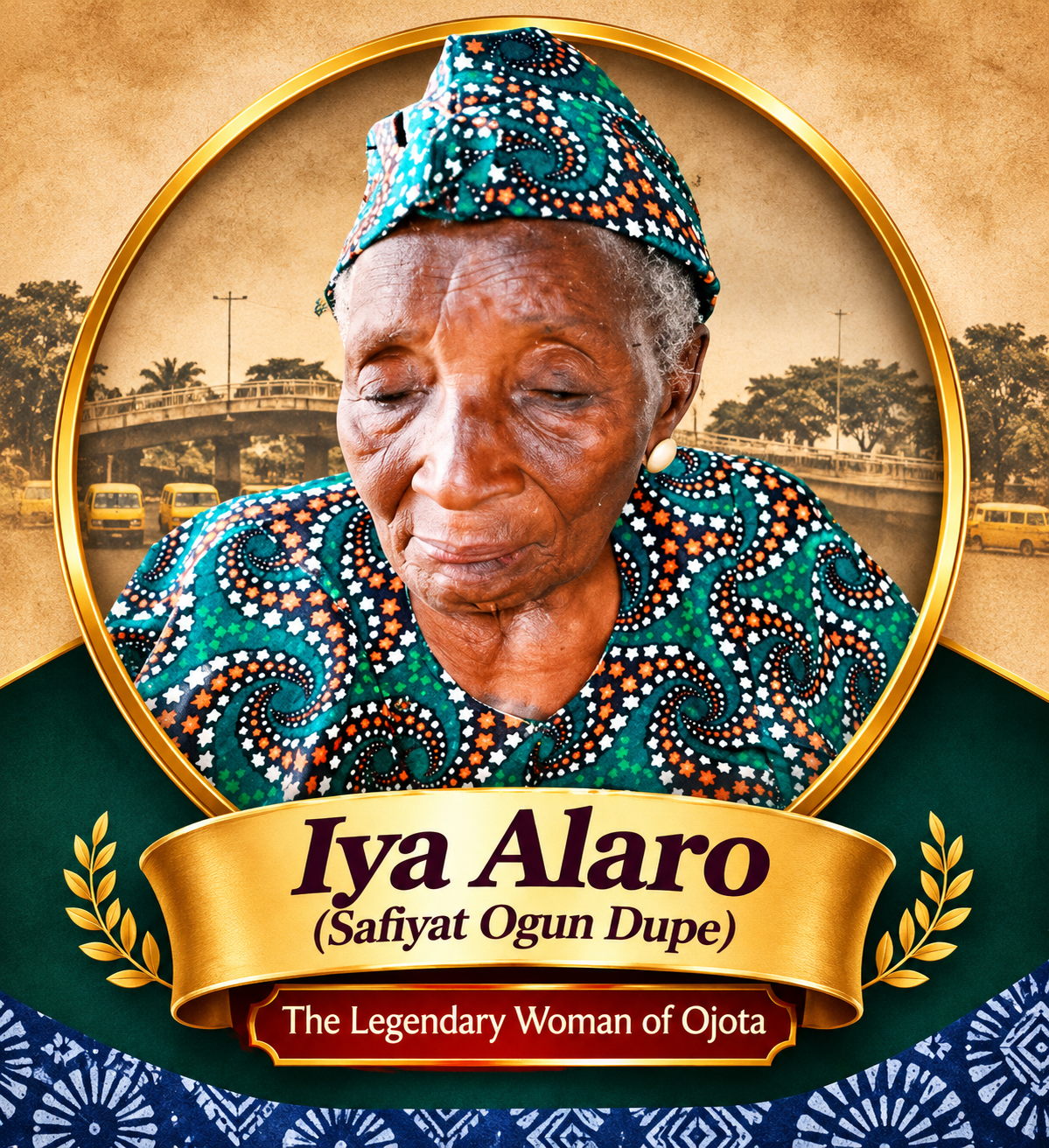
Some people pass through this world and are remembered only by those who knew them, while others leave behind a legacy that continues to speak long after their departure. Their names become part of family history, their deeds become stories passed from one generation to another, and their influence remains deeply rooted in the lives of the people they touched. Such is the story of Iya Alaro, a legendary woman remembered for her great influence, traditional significance, kindness, and remarkable place in her community.
The biography of Iya Alaro reaches back to the olden days, when she was widely known for her reputed powers and her association with the ability to control water. Her story is one of tradition, family, business, motherhood, spirituality, and a legacy that continues to live through her descendants.
Although she became popularly known as Iya Alaro, her original name was Safiyat Ogun Dupe. She hailed from Osun State and eventually became a woman whose name was recognized beyond the immediate circle of her family. Her life story remains an important part of the history preserved by her family and the community in which she lived.
CHAPTER 02
Her Early Life and Identity
Iya Alaro, originally named Safiyat Ogun Dupe, came from Osun State. Although the details of her early childhood are not fully documented in this account, her later life reveals a woman who became influential through her business, family relationships, traditional practices, and interactions with members of society.
Over time, she became widely known by the name Iya Alaro, a name that would eventually become associated with her identity, her activities, and the stories surrounding her life. The name became more than a personal title; it became a part of the history and heritage that her descendants continue to remember.
Her life journey took her through different experiences, relationships, and responsibilities before she eventually settled into the Isiaka family, where she built a family and raised her children.
CHAPTER 03
Her Marriages and Family Life
Before finally settling into the Isiaka family, Iya Alaro was married to two husbands. Through these marriages, she became a wife and a mother, carrying the responsibilities that came with both roles.
She gave birth to seven children across her marriages and, according to the family account, loved all her children equally. She did not abandon her responsibilities toward any of them but continued to perform her duties as a mother to all seven children. She also fulfilled her responsibilities as a wife within her marriages.
Eventually, she became part of the Isiaka family, where her family life continued to develop. She raised her children, watched them grow, and lived to see the family expand through subsequent generations.
Her children later had children of their own, and the lineage continued to grow. Today, the Alaro lineage remains alive through her children, grandchildren, and great-grandchildren. This continuing family connection is an important part of her legacy because it demonstrates that, although a person's lifetime eventually comes to an end, their family story can continue for generations.
CHAPTER 04
Her Business and the Origin of Her Influence
Iya Alaro was also a hardworking businesswoman who traded in herbs and other goods. During the period when she lived at Number 100, Victoria, she regularly travelled to Eko Market to purchase goods for her business.
Her involvement in herbal trading made her well known among people who dealt in or sought such products. As her business developed, she gained many workers who assisted her with her activities. Her work required determination, experience, and an understanding of the goods she sold.
Whenever she needed particular leaves for her trade, she would travel to Ojota, specifically Amoo Street, where she discovered land containing many of the leaves she required. The land was particularly suitable for her needs because it provided access to the natural materials she sought.
After discovering this fertile land, she eventually acquired land there and built a house on Amoo Street. This marked an important development in her life, as the place became connected to her residence, her activities, and the history associated with her name.
Her story demonstrates that she was not remembered only as a mother and a traditional figure but also as a woman who engaged in business and established a place for herself and her family.
CHAPTER 05
The Story Behind the Name Iya Alaro Bridge
One of the most memorable parts of Iya Alaro's story concerns a bridge that became associated with her name.
According to the account passed down about her life, accidents frequently occurred around the bridge during the olden days. The repeated accidents caused concern, and Iya Alaro became involved in activities connected with the bridge and the safety of those who used it.
She reportedly went around preaching and sharing her concerns about the bridge. In the course of these activities, she named it Iya Alaro Bridge, and the name became popularly associated with the location because of the incidents that occurred there and the stories surrounding her involvement.
The bridge consequently became an important part of the local history connected with Iya Alaro. Her name remained attached to it, making the location one of the places through which her story continued to be remembered.
According to the family and traditional account, Iya Alaro also wore black clothing when carrying out the worship associated with the bridge. The explanation preserved in the account connects the black clothing with the bridge and the traditional requirements associated with the practice.
The worship of the bridge reportedly took place once every year, making it an annual observance. These activities became part of the traditions associated with her name and contributed to the stories that continued to circulate about her.
The account also preserves a reference to the expression, “Ragi Ransack,” associated with the military days and the activities surrounding the worship. Further details about the expression and its precise historical meaning would require clarification from family members or other people familiar with the original tradition.
These accounts form part of the traditional history associated with Iya Alaro. They illustrate how places, practices, and community memories can become closely connected to the life of a person who held a distinctive position in local history.
CHAPTER 06
A Woman Remembered for Her Kindness and Compassion
Beyond her business, traditional associations, and family responsibilities, one of the most important aspects of Iya Alaro's story was her kindness toward other people.
According to those who remember her, she was not a wicked woman. Rather, she was known for helping people who found themselves in difficult situations. Whenever someone approached her in distress, she would do her best to offer assistance.
Her kindness was not limited to members of her immediate family. She extended help to people around her, showing concern for those who needed support. To many people, she was more than Iya Alaro; she was like another mother, someone they could approach when they needed comfort, guidance, or practical assistance.
It was said that a person could come to her crying and leave smiling because of the help she offered. This description captures the image of a woman whose compassion brought relief and hope to others.
She was loved and cherished by many because of the way she treated people. Her willingness to help others contributed to the affection and respect associated with her name.
Her story reminds us that true influence is not measured only by wealth, status, or the number of people who know a person's name. It is also measured by the lives that person touches, the burdens they help others carry, and the kindness they leave behind.
CHAPTER 07
Her Later Years and Death
Iya Alaro lived to an advanced age and, according to the family account, died at the age of 138 years. Her long life allowed her to witness the growth of her family and the development of a lineage that continued beyond her own generation.
As she grew older, she eventually passed away after a long life. Her death was a deeply painful experience for her family and for members of the community who had received her help or had known her personally.
Losing her was one of the tragic events in the history of her family and the society in which she had lived. For those who loved and respected her, her departure meant losing a mother figure, a source of assistance, and a woman whose name had become part of their shared history.
Yet, as life teaches us, death is an unavoidable part of the human journey. No matter how long a person lives or how deeply they are loved, every human life eventually reaches its end.
However, death does not necessarily erase a person's influence. The memories they leave behind, the values they teach, the relationships they build, and the traditions associated with their lives can continue long after they are gone.
For Iya Alaro, her passing marked the end of her earthly life, but it did not mark the end of her family story.
CHAPTER 08
The Continuation of Her Legacy
Following Iya Alaro's death, her lineage continued to grow, and her descendants carried aspects of her legacy forward. Although the work and activities associated with her life did not continue in precisely the same residence or circumstances, her family maintained a connection with the history she left behind.
Her children, grandchildren, and great-grandchildren became living reminders of her existence and the family she established. Through them, the Alaro lineage continued to expand, preserving the connection between past and present.
Her legacy therefore exists in several forms: in the descendants who bear the history of her family, in the stories told about her life, in the traditions associated with her name, and in the memories of those who remember her kindness.
Every generation that learns about her contributes to the preservation of her story. By recording her biography, her descendants can ensure that future generations understand who she was, how she lived, the family she raised, the work she carried out, and the influence she held in the community.
This is why documenting her history is important. A family's history is not merely a record of names and dates; it is a record of the experiences, relationships, struggles, traditions, and values that shaped the generations that came before.
CHAPTER 09
Conclusion: A Name That Lives Beyond Its Bearer
The story of Iya Alaro, born Safiyat Ogun Dupe, is a story of family, business, tradition, motherhood, kindness, and enduring remembrance. From her origins in Osun State to her herbal trade, her residence on Amoo Street, her marriages and seven children, and the traditions associated with Iya Alaro Bridge, her life became woven into the history preserved by her family and community.
She was remembered not only for the reputed powers and traditional practices associated with her name but also for the compassion she showed to people who needed help. She was a mother to her children and, in the memories of many, a mother figure to others who came to her for assistance.
Her reported death at the age of 138 brought sadness to those who knew her, but her descendants continued to carry her family history forward. Her children had children, her grandchildren became part of a growing lineage, and her great-grandchildren became another link in the chain of generations.
Ultimately, the story of Iya Alaro teaches us that a person's life can become part of something much larger than the individual. A person may leave the world, but their influence can remain in the family they raised, the people they helped, the traditions they preserved, and the memories they inspired.
Iya Alaro may have departed this world, but her name continues to live through her lineage, her history, and the people who remember her. Her life has ended, but the story of her legacy continues.